
Luci Della Ribalta officially launched in 1997, but its story is rooted in years of prior experience in professional lighting.
All these years in the industry have given us the chance to meet and collaborate with so many talented people — individuals with fascinating backgrounds and stories of their own that certainly deserve to be known. That’s why we decided to start sharing them.
With this first interview with Mandy Bullock-Williams, we are launching a new series that puts the spotlight on the people who have shaped and lived this craft as true protagonists. It’s a way to remember where we come from, but above all, to pass on valuable insights and inspiration to the next generation.
Mandy is Sales Executive at Goboplus Ltd, a highly respected and well‑known UK-based company that, among its prestigious brands, also distributes Luci della Ribalta.
When an interview starts with “I first started playing with lights, as my mother put it, when I was 14…”, there is really only one thing to do: dive right in and enjoy the ride!
LDR: Welcome Mandy, let us start with how you first approached this fascinating world…
I first started playing with lights, as my mother put it, when I was 14. My first boyfriend, who now has his own lighting company, went to a school that had a full lighting rig and, instead of acting, he found lighting and back stage his thing, so I used to tag along for technical rehearsals’.
I went with him to Fred Bentham’s Strand Lectures; when he left school he worked for Theatre Projects in Mercer street in Covent Garden, so when he was working at weekends I went there to help, usually sitting on an old mattress putting on plugs and sockets.
I later worked for Theatre Projects in Covent Garden, helping the Sound sales side, then, later, on the trade Counter. During my time there I met and worked with Richard Pilbrow, David Hersey, Andrew Bridge, Howard Eaton, to name just a few.
LDR: So you began directly in the field, as a technician. What do you recall from that period, and what roles did you undertake?
Things were very different in the late 70’s and early 80’s; females were not allowed to work much on site. In the warehouse was different: I could test fixtures and wire up cables etc.
If I went out on an event it was usually unloading the van helping to set up the lighting equipment and placing them where they needed to be and cutting any filter. Later I became a followspot operator on a few Royal tournaments.
I think the first time I operated a Manual Strand lighting board was when I worked for Playlight lighting rental as their dept hire manager on a TV show in Amsterdam.
LDR: Later on you chose to take a slightly different direction, moving into sales and product-related work.
I moved into the sales firstly when I was the sales manager for Playlight, which as you already know I had been the deputy hire manager at; initially I mostly sold the consumables required for customers placing hire orders, we then became Distributors for Strand Lighting and employed a Brian Myers who had worked for Strand on many installations in UK schools and he taught me about all the many things that are required for a lighting installation. I then moved to Lighting Technology where I worked in Export, Purchasing and eventually ran their filter room were scrolls, colour calls and filter orders were manufactured and processed.
When Lighting Technology went into Liquidation, Paul Deville, today’s GoboPlus’s Owner, approached me to come and work at Lightfactor Sales and start up a Filter room for them. During my time at Lightfactor Sales I ran the sales office, then went on to field sales for Lightfactor and for Zero 88 then, when Lightfactor was merged into the Eaton business. My main job here was to develop the LDR and DTS sales with the other field sales staff; I didn’t have a great knowledge in Control Systems when I first joined the Zero 88 team, but by the end, thanks to my colleagues, I knew a lot more.
LDR: At what point did your encounter with LDR products occur?
I first encountered LDR products 20 (and more) years ago when I joined Lightfactor Sales as they were their UK distributor at that time and even though they were sold off to an American company, they stayed the UK distributor until 2019.
LDR: Even setting aside Luci della Ribalta for a moment, what do you believe are the essential qualities that a professional, top-tier followspot should possess?
A followspot should have excellent optic’s, good balance, which enables to be operated smoothly, have an easily reachable iris, be both Manual and DMX if LED and also easy to manually dim.
LDR: Training also plays a very significant role in your career. Could you expand further on this subject?
I have held two types of training course’s with Andy Friedli, who was then working at Leisuretec, and we ran a course for their customers that had the title of “Lighting Basics”. It went through incandescent and Led fixtures and how to set them up and control them using basic products at first, then with more up to date control systems, using Floods, Fresnels and Profiles we used LDR incandescents and Chauvet Led fixtures, whilst we used Zero 88 to control the fixtures. Andy and I went through how to light a stage and the actors and what was required to do this. We both believe that in order to get the most out of the new LED fixtures, knowing how incandescent and analogue controls worked is essential.
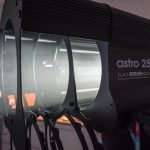
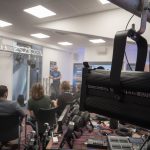
My latest training was at Leeds college showing to the students how to set up and operate 2x LDR Astro LED followspots combined with a general overview of how to operate manual followspots. I also went through the history of Followspots starting with Limelight’s through to LED, which is the choice of today.
LDR: Given your frequent contacts with the younger generation, how do you perceive the future of the professional lighting sector?
The students that I have met on-site and at trade shows are still as enthusiastic as my generation, when we were first starting out; they still have that buzz when they see new equipment, so I’d say the lighting sector is safe in their hands.
LDR: Could you share with us a future project or perhaps a dream in the drawer that you have not yet realised?
I am working with an old colleague who helps run a provisional theatre that is hoping to convert their Lighting rig and front-of-house lighting to LED, which should happen next year, and part of the refurbishment will be some LDR LED Fresnel’s and Profiles. They have had LDR Astro 250s since they first came out and have recently taken my old demo 250HP which they are very pleased with.
I would like to get more LDR followspots into UK regional theatres so I’m planning on next year trying to contact them directly, not just at Trade shows. I know this will require me doing what most people would say is the old fashioned method of talking to them; they are busy people and don’t always read emails, but if you can get their attention this works. I also intend working for many years to come, probably reducing my days; I love my job and all those people I have met over the last 50 years are my friends.